Stainless Steel
Stainless steel is a corrosion-resistant, iron-based alloy used across food processing, catering equipment, medical devices, construction, automotive, and general engineering applications. Its chromium content forms a passive oxide layer that provides long-term protection against rust and staining.
We are able to source stainless steel across a range of standard grades and finishes to suit your application:
Grades
304 / 304L — general purpose, excellent corrosion resistance, widely used in food and catering
316 / 316L — enhanced resistance to chlorides and marine environments
430 — ferritic grade, cost-effective for interior and decorative applications
409 — ferritic grade for automotive exhaust and structural applications
Surface Finishes
2B — standard mill finish, smooth and reflective
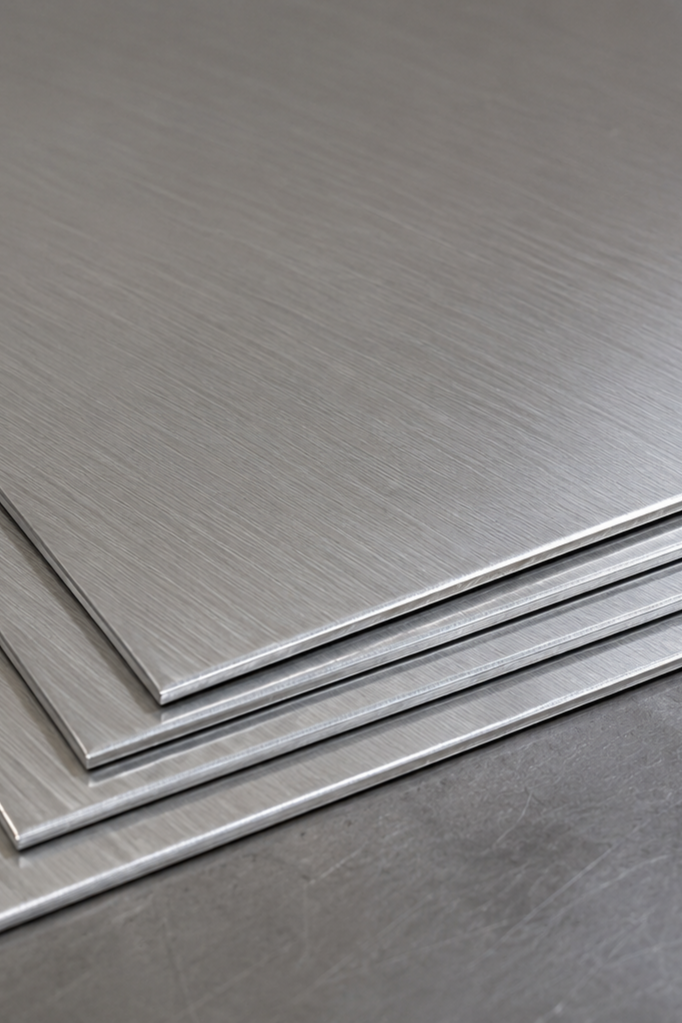
No.4 — brushed finish for decorative and hygienic applications
BA — bright annealed, highly reflective finish
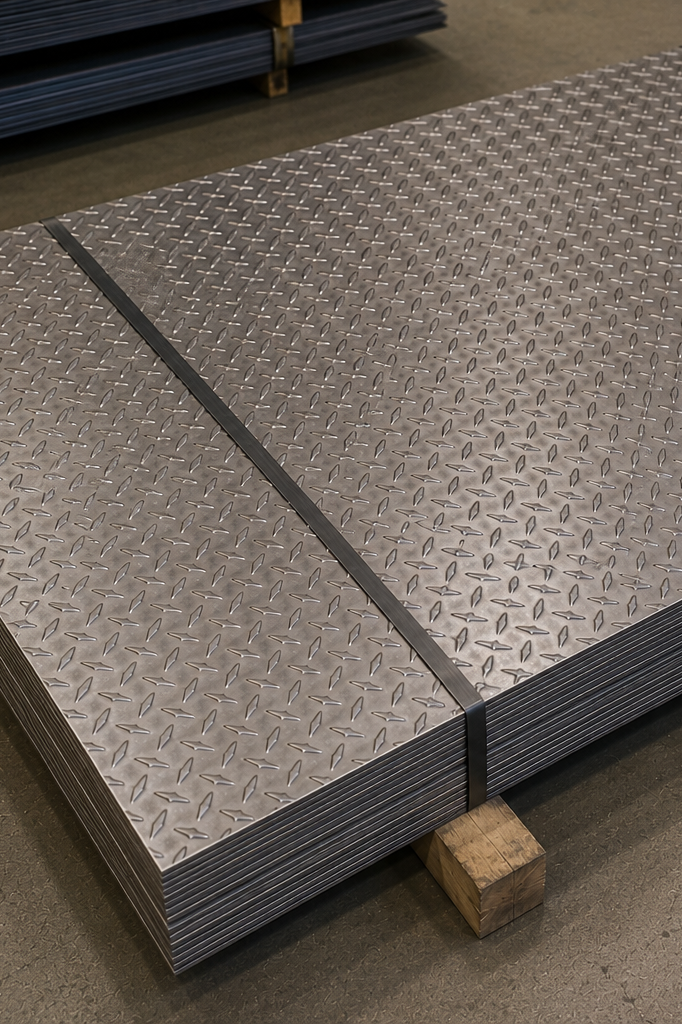
HR (Hot Rolled) — scaled finish for structural and engineering use
Available Forms
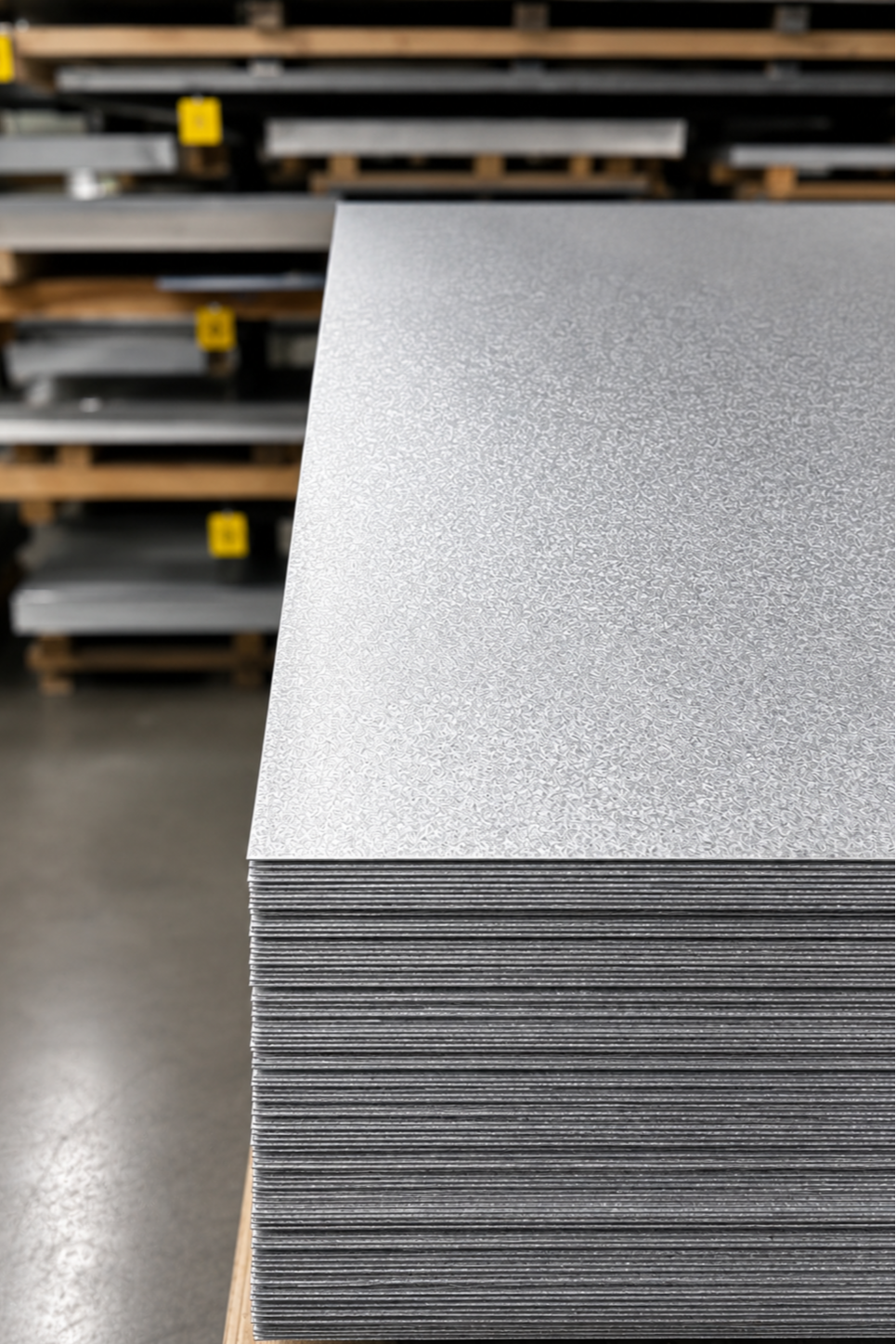
Sheet
Blanks
Slit coil
Full coil
Cut to length
Frequently Asked Questions
-
Grade 304 is a widely used general-purpose stainless steel suitable for many indoor and outdoor applications. Grade 316 contains molybdenum, giving it increased resistance to chloride-related corrosion. It is commonly selected for coastal, marine, chemical and more demanding industrial environments. Neither grade is suitable for every environment, so operating conditions should be considered carefully.
-
Stainless steel sheet is used for food-processing equipment, commercial kitchens, tanks, enclosures, architectural panels, pharmaceutical equipment, machinery, transport components and general fabrication. Its combination of corrosion resistance, cleanability and appearance makes it suitable for both functional and decorative applications.
-
Common finishes include 2B mill finish, bright annealed, brushed, satin and polished surfaces. A 2B finish is smooth and lightly reflective, while brushed or polished finishes are often selected for visible components. Finish availability depends on the grade, thickness and dimensions required.
-
Stainless steel is highly corrosion-resistant but not completely corrosion-proof. Staining or corrosion can occur if the wrong grade is selected, the surface is contaminated with carbon-steel particles or the material is exposed to aggressive chemicals or chlorides. Correct grade selection, fabrication practices and regular cleaning help maintain its performance.
-
Many stainless steel grades can be welded using processes including TIG, MIG and resistance welding. The correct filler, shielding gas, heat input and post-weld cleaning procedure depend on the grade and application. Heat tint and contamination should be properly removed where corrosion resistance is important.
-
Selected stainless steel sheets can be supplied with a removable protective film to reduce scratching during cutting, forming, handling and transport. Protective film is particularly useful for brushed, polished and other visible finishes. The required finish, visible face and film type should be specified when ordering.
Our Products
We supply a comprehensive range of Ferrous and non-Ferrous metals to suit a variety of applications.